The Elder Futhark – 24 runes, ordered in three aettir. Names, sound values and meaning, grounded in the old rune poems.
Want to know which rune speaks to you today? Draw your rune of the day →
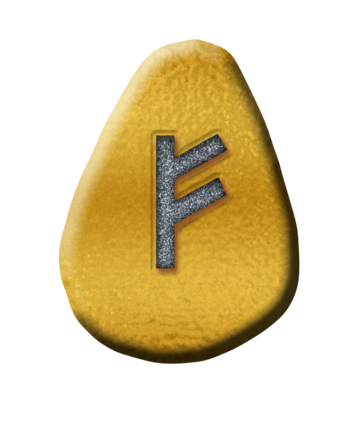
Cattle, gold. Wealth you earn through work, abundance and success – share what comes to you.
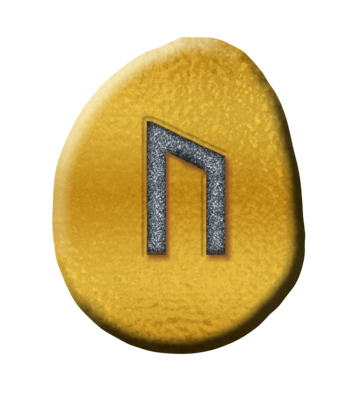
The aurochs. Raw life force, health, courage and an untamed new energy.
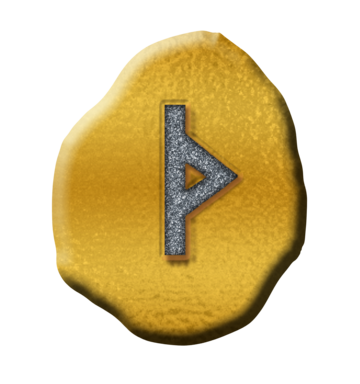
The thurs, the thorn. A force from outside – at once protection and warning. Act with care.
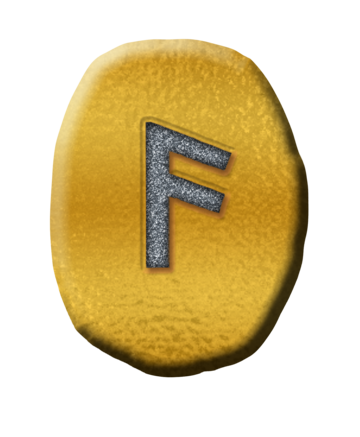
Odin’s breath, the word. Message, wisdom, inspiration – listen closely, counsel is reaching you.
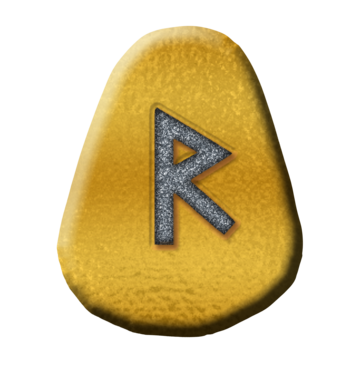
The ride, the journey. Setting out and movement, the right path in the right rhythm.
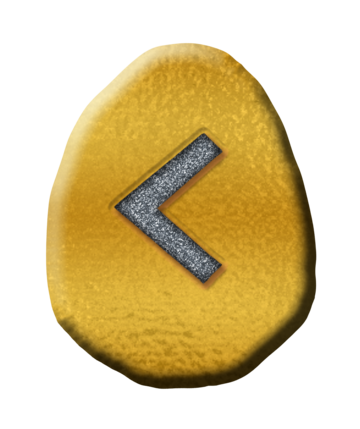
The torch. Insight, creative power, light in the dark; skill and craft.
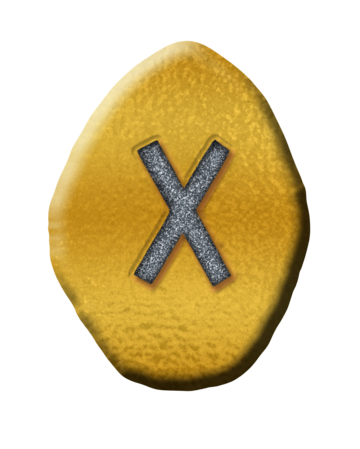
The gift. Generosity, partnership, a mutual bond – giving and taking in balance.
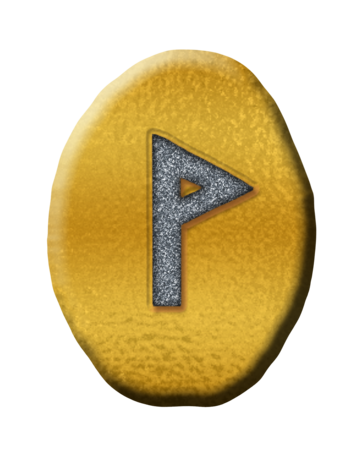
Bliss. Joy, fulfilment, concord; a wish comes true.
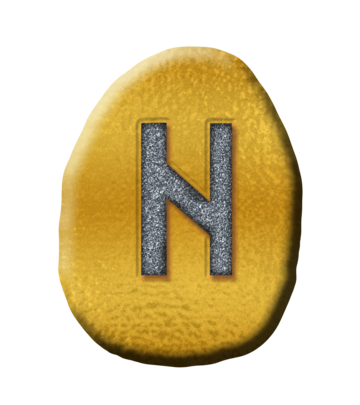
Hail. A sudden upheaval, a trial of nature – afterwards, all clears.
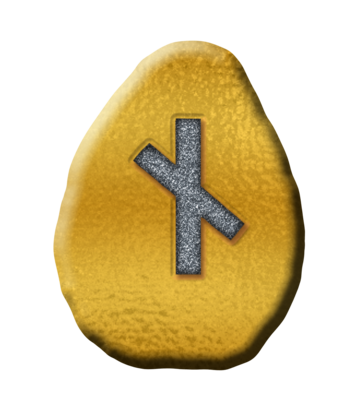
Need. Want and constraint – but also the will that grows from it. Patience teaches.
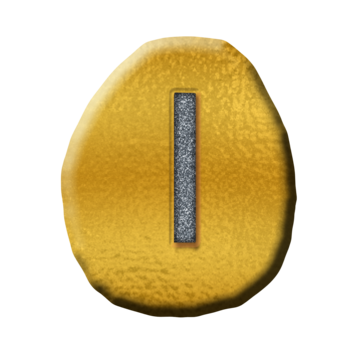
Ice. Standstill and pause, clarity in stillness; await the right moment.
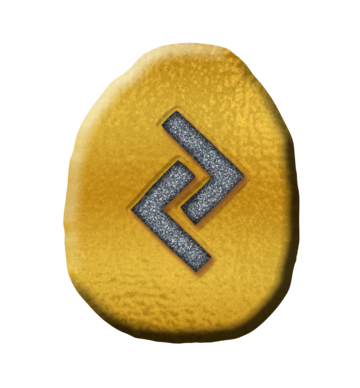
The good year. Harvest and the reward of effort; the natural cycle comes full circle.
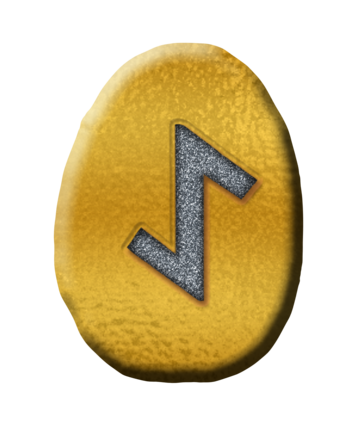
The yew, the world tree. Steadfastness and transformation, the bond of beginning and end.
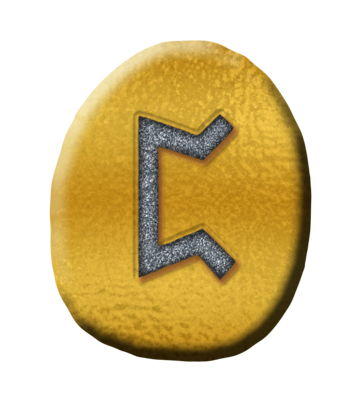
The lot-cup. Mystery, fate, the hidden; a fortune yet to reveal itself.
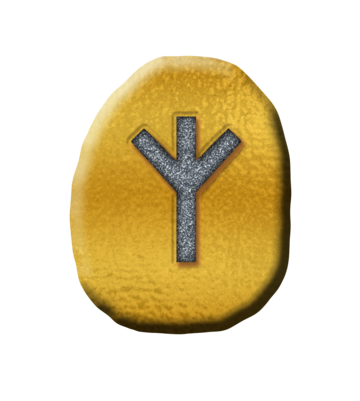
Protection, the elk-sedge. Safekeeping, instinct, a sheltering hand above you.
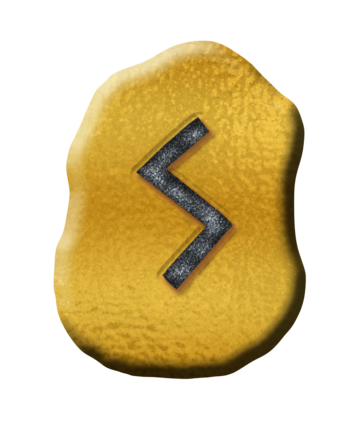
The sun. Success, vitality, clarity and victory; the goal is within reach.
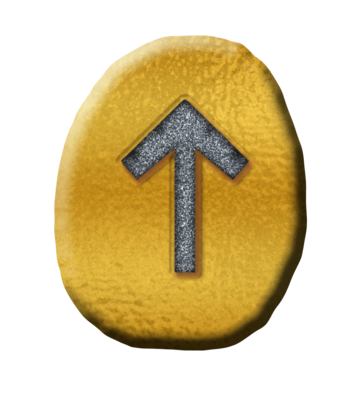
The rune of Tyr. Courage, honour, justice and sacrifice for the greater good – victory through righteousness.
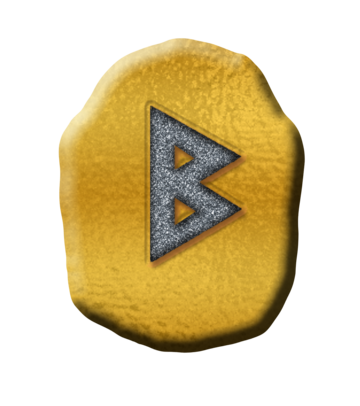
The birch. New beginnings, fertility, protection and care; something new is growing.
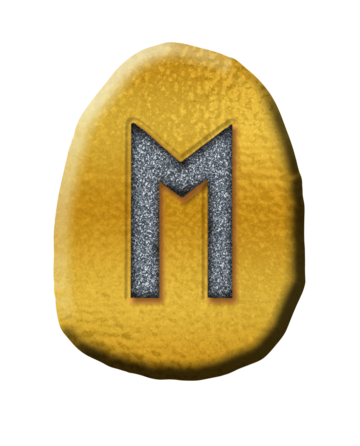
The horse. Movement in trust, faithful partnership, steady progress.
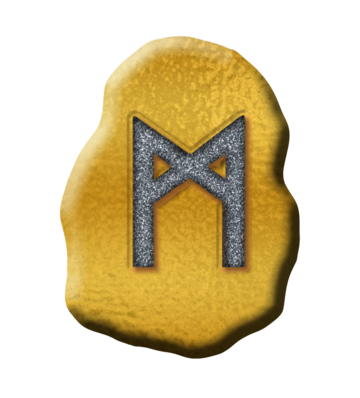
Humankind. The self and the community, reason; know yourself and those close to you.
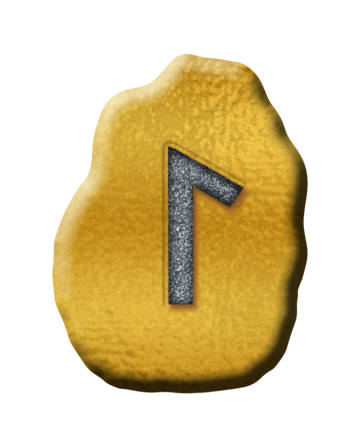
Water, the lake. Intuition and the flow of life; follow the inner current.
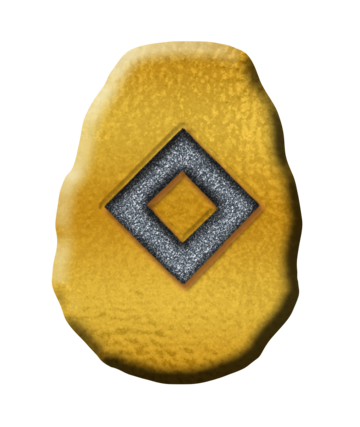
The god Ing. Ripeness and completion, gathered power released; a venture comes to a close.
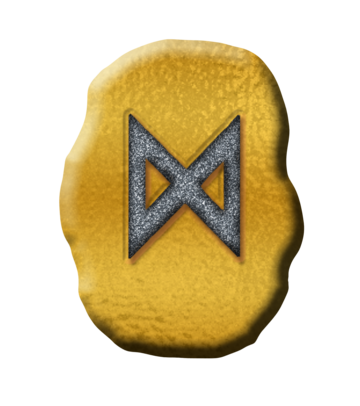
Day, the morning light. Breakthrough, awakening and hope; darkness turns to light.
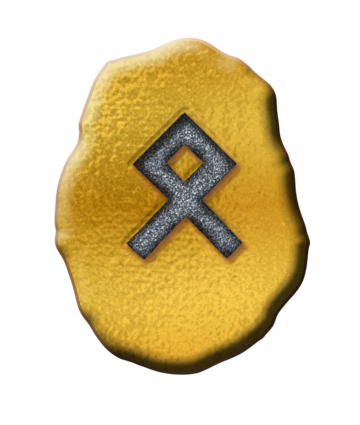
Heritage, the homestead. Home, origin and inherited values – that which endures and sustains.
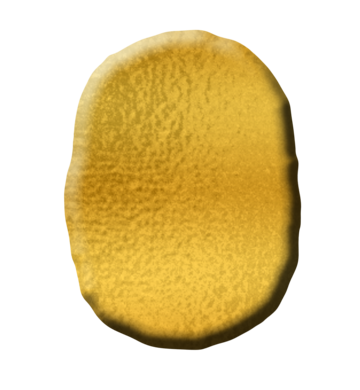
The blank rune – Wyrd, fate. What only the gods know. Here knowledge ends and trust begins.
A modern addition (Ralph Blum, 1982) – not historically attested, but a fine symbol for the unfathomable.
Runes are not an esoteric sign system but the oldest native script of the Germanic peoples – in use for over a thousand years, from the burial mounds of Scandinavia to the trading harbours of the Vikings. This overview sums up what runology can demonstrate today, where it remains cautious, and where popular ideas belong to the realm of modern legend. Every interpretation on our individual rune pages rests on this foundation.
The origin of the runic script is still not settled – a rare case where scholarship honestly says: “we don’t know for certain.” There is agreement that the runes arose around the turn of the era through contact with a Mediterranean alphabet. Which one is disputed: older scholarship favoured a North Italic (Etruscan-Alpine) model, others the Latin alphabet of the Roman imperial age, still others the Greek. Bengt Odenstedt and Michael Barnes show that none of these theses can be fully proven – too many rune forms have several possible sources.
The chronological depth is certain. Among the earliest witnesses are the Vimose comb (Funen, c. 160 AD) bearing the word harja, the Meldorf fibula (c. 50 AD, though its signs are disputed) and the Negau helmets. In 2023 a find from Norway caused a stir: the Svingerud or Hole stone from the grave field at Hole. Radiocarbon dates from the associated graves place the inscribed sandstone fragments at 50 BC–275 AD – making it, on current evidence, the world’s oldest datable runestone. The scholarly paper appeared in 2025 in the journal Antiquity.
Attested: runes are traceable from the 1st/2nd century AD; they were carved on metal, bone, wood and stone; their order (the “futhark”) is fixed from the start.
Assumed / disputed: the exact alphabetic model, the place of “invention”, and whether a single person or a workshop stood at the beginning. Anyone promising certainty here is going beyond the sources.
… or do we know better? The finest explanation isn’t in any museum anyway, but in the Hávamál (st. 138–139): for nine wind-cold nights Odin himself hung on the world-tree, wounded by his own spear, given to himself – no bread, no horn – until he seized the runes, screaming, from the depths below. Of course none of that can be proven. But perhaps we do know better – a small wink allowed.
There is no single set of “the” runes – there are three historical main rows that developed apart over the centuries. Their number of signs is no accident but mirrors language change and writing practice.
| Row | Signs | Time & place | Distinctive feature |
|---|---|---|---|
| Elder Futhark | 24 | c. 150–800 AD, the whole Germanic world | The original form, ordered in three ættir of eight runes each. The basis of this lexicon. |
| Younger Futhark | 16 | c. 800–1100, Scandinavia (Viking Age) | Reduced to 16 signs even as the number of sounds grew – one rune must carry several sounds. Later “dotted” runes brought clarity. |
| Anglo-Saxon Futhorc | up to ~33 | c. 400–1100, England & Frisia | Expanded to render new sounds of Old English. Source of the Old English Rune Poem. |
That the Vikings shrank their script to 16 signs while the number of sounds increased is one of the curiosities of writing history: legibility was clearly a matter of context – one knew from the surrounding words which sound was meant. Only in the High Middle Ages were dots added (the “stungnar rúnir”) to resolve ambiguities.
What individual runes “mean” we know not from the runic era itself but above all from three medieval rune poems. They name each rune and give it a short, often riddling mnemonic stanza. These poems are the single most important source for every interpretation – including those on our individual pages. Important: they are younger than the runes themselves and already carry Christian colouring.
The Old English Rune Poem (manuscript c. 1000, transmitted via the Cotton collection burned in 1731) is the fullest. Of the first rune feoh (Fehu) it says:
“Feoh byþ frofur fira gehwylcum; sceal ðeah manna gehwylc miclun hyt dælan gif he wile for drihtne domes hleotan.” – Wealth is a comfort to every man; yet each must share it freely, if he would gain honour before the Lord.Old English Rune Poem, st. 1 · trans. after Bruce Dickins 1915 (public domain)
The Norwegian and Icelandic Rune Poems (13th–15th c.) describe the 16-sign futhark of the Viking Age and are terser, often darker. The Icelandic poem is almost a collection of kennings – poetic paraphrases. Together with the Abecedarium Nordmannicum (Codex Sangallensis 878, 9th c.) they form the source framework for the rune names.
One and the same rune often carries quite different images in the three rune poems. This is due to language change, time and – above all – Christianity, which softened the heathen names in the south. These divergences are not a flaw in the tradition but its most revealing part:
| Rune | Old English | Norwegian | Icelandic |
|---|---|---|---|
| Fehu · ᚠ | wealth is a comfort – yet share it | wealth is discord among kinsmen; the wolf in the wood | wealth is discord, sea-fire and the serpent’s path |
| Uruz · ᚢ | the wild aurochs, high-horned | iron slag from bad ore; the reindeer on hard snow | drizzle – „the weeping of clouds" |
| Thurisaz · ᚦ | the harmless thorn (softened) | the giant (Þurs) – „torture of women" | the giant – torment of women, dweller of cliffs |
| Ansuz · ᚬ | the mouth, source of speech | the river-mouth – the way of most journeys | the god (Odin) – prince of Ásgard, lord of Valhalla |
| Kenaz · ᚴ | the torch, bright light | the ulcer – bane of children | the ulcer – „house of rotting flesh" |
| Hagalaz · ᚼ | the hail that turns to water | „Christ created the world of old" | cold grain, sleet – „sickness of serpents" |
In short: both traditions handle the heathen legacy differently. The Old English poem quietly defuses the dangerous names – the giant becomes the thorn, the god (Odin) the mere mouth. The Norse versions keep the old images more strongly – most faithfully the Icelandic one; the Norwegian, however, even inserts an openly Christian line (at Hagall: „Christ created the world of old"). Whoever interprets a rune should therefore always ask: according to which poem?
Runologists transliterate inscriptions by fixed rules. Transliterated runes are set in bold, reconstructed sounds in brackets; the direction of reading can be rightward, leftward or alternating (boustrophedon). Bind-runes – two signs sharing a single stave – are common. Unlike modern “wish bind-runes” (a 20th-century invention), they usually served only to save space.
The name “futhark” is itself a reading aid: it simply spells out the first six signs of the row (F-U-Th-A-R-K), just as our “alphabet” is named after alpha and beta. This fixed order stayed remarkably stable across centuries and half a continent – strong evidence that the runes were handed down as an ordered writing system, not a loose collection of signs.
Did runes carry magical power? The honest answer is: sometimes, but far less often than pop culture believes. The overwhelming majority of inscriptions are plain and practical – names, ownership marks, memorial formulas (“X raised this stone for Y”). The runologist R. I. Page warned all his life against a “magical” over-reading.
At the same time there are genuine formula words that recur and whose sense remains dark: alu, laukaʀ (leek – a symbol of growth and purity) and a repeated þ. The Blekinge stones (Björketorp, Stentoften) bear an outright curse against whoever destroys the monument. Such evidence shows: a ritual-magical use existed – but alongside, not instead of, the everyday script.
Popular symbols such as Vegvísir and Ægishjálmur (“helm of awe”) are often sold as “Viking runes” – but they come from Icelandic grimoires of the 16th–19th centuries (such as the Huld Manuscript, 1860) and are not runic inscriptions of the Viking Age. The blank “Odin’s rune” too is a modern addition (Ralph Blum, 1982). We are happy to show such signs – but name their origin honestly.
The runes are no theory – you can touch them. A few key witnesses:
| Find | Dating | Why it matters |
|---|---|---|
| Kylver stone (Gotland) | c. 400 | The oldest complete listing of the 24-rune futhark. |
| Golden Horns of Gallehus | c. 400 | Famous alliterative inscription “Ek HlewagastiR HoltijaR horna tawido” – I, Hlewagast, made the horn. |
| Rök stone (Östergötland) | c. 800 | The longest known runic inscription, an enigmatic memorial. |
| Jelling stones (Denmark) | c. 965 | Harald Bluetooth’s “baptismal stone” of Denmark – runes at the threshold to Christianity. |
| Bryggen sticks (Bergen) | 12th–14th c. | Hundreds of wooden staves with everyday texts – trade, love, mockery: runes as a living working script. |
This lexicon draws throughout on the recognised runological literature. Where names, sound values or interpretations are disputed, we note it in the text.
Read all 24 runes in full → · Younger Futhark · Futhorc · Rune Handbook (PDF)
Subscribe to our newsletter and secure your discount (on orders from €30).