Sun & Victory
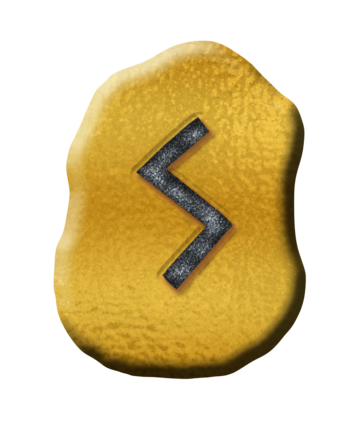
Sowilo is the sun, the victorious rune of success, vitality and clarity. It breaks through the fog and shows the goal within reach – energy and confidence are on your side. Let your light shine today; you have the strength to complete your undertaking.
‘Sowilo/Sól/Sigel’ is the sun. One of the few runes interpreted as wholly positive – light, victory, vitality.
The Old Norse poem calls the sun ‘the light of the world’ and bows before its holy fate. The Old English praises it as the hope of seafarers, carrying them over the sea until they reach land.
For seafarers, the sun was orientation and rescue. Sowilo stands for victory, clarity and the unbroken power of light.
How important the sun was is shown by the Bronze Age ‘Trundholm sun chariot’ – the veneration of the sun’s course reaches back millennia in the North.
Sigel semannum symble biþ on hihte, ðonne hi hine feriaþ ofer fisces beþ, oþ hi brimhengest bringeþ to lande.The sun is ever a hope to seafarers when they journey over the fishes’ bath, until the sea-steed brings them to land.Old English Rune Poem, st. 16 · trans. after Dickins 1915 (public domain)
The Icelandic poem sings splendidly: „Sun is the shield of the clouds and a shining ray and the destroyer of ice." In the North she lives on as Sól – light, victory, life-force.
Proto-Germanic *sōwilō „sun". Old Norse sól, Old English sigel, Gothic sauil, cognate with Latin sōl. The name is rooted across the whole Indo-European family – the sun as the oldest deity of the North.
The s-rune appears in an angular „lightning" form (Sig-rune) and is attested everywhere as the sound /s/. Important: the doubled Sig-rune used as the „SS" sign in the 20th century is a modern abuse – it has nothing to do with the ancient sun-rune and its meaning. More in our article on the „Black Sun".
Sowilo closes Hagal’s ætt (runes 9–16). Its „sun/victory/light" reading is secure across all rows (Dickins; Page). The modern political appropriation of the Sig-rune is historically baseless and must be clearly separated from runology.
Rune-poem quotation: Old English Rune Poem after Bruce Dickins, Runic and Heroic Poems (Cambridge 1915, public domain); Norse stanzas after the Norwegian and Icelandic Rune Poems. Interpretation & etymology after R. I. Page (Runes), Michael Barnes (Runes – A Handbook) and Klaus Düwel (Runenkunde). Where name or meaning is disputed, it is noted in the text. In depth: runology overview.