Water & Intuition
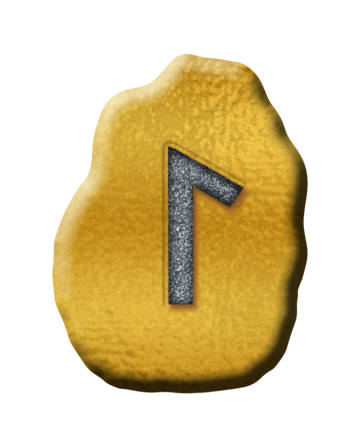
Laguz is water, the lake, the rune of intuition and the flow of life. It invites you to follow the inner current and to listen to the unconscious, rather than fighting against the stream. Today, let your feeling guide you – water finds its own way.
‘Laguz/Lögr’ is water, the lake, the flood. Rune of the flowing, of the unconscious, of intuition.
The Old English poem describes water as seeming endless to people when they venture out on a tossing ship and the sea-waves frighten them.
For the Vikings the sea was both lifeline and threat – a road to riches and the grave of many seafarers. Laguz stands for this unpredictable, bearing force.
Water was sacred: springs and wells were regarded as places of wisdom – think of Mímir’s well beneath Yggdrasil.
Lagu byþ leodum langsum geþuht, gif hi sculun neþan on nacan tealtum, and hi sæyþa swyþe bregaþ, and se brimhengest bridles ne gymeð.The sea seems endless to men, must they venture on the tossing boat; the ocean waves terrify them greatly, and the sea-steed heeds not the bridle.Old English Rune Poem, st. 21 · trans. after Dickins 1915 (public domain)
The Icelandic poem: „Water is an eddying stream and a broad geyser and the land of the fish." The same ambivalence: water bears and threatens, intuition that cannot be reined in.
Proto-Germanic *laguz „water, lake". Old Norse lögr, Old English lagu. Some also link the rune to the formula word laukaʀ („leek", growth) – an example of how closely sound-signs and magical formula words lie together.
As the sound /l/ Laguz is frequent. In amulet inscriptions laukaʀ/lauʀ appears as a blessing word; whether the l-rune there is „merely" a letter or a meaning-sign remains a matter of interpretation.
Laguz is a good test case for the border between script and formula: the same sound stands in everyday words and in blessing words. Runology stays deliberately cautious here (Looijenga; Page).
Rune-poem quotation: Old English Rune Poem after Bruce Dickins, Runic and Heroic Poems (Cambridge 1915, public domain); Norse stanzas after the Norwegian and Icelandic Rune Poems. Interpretation & etymology after R. I. Page (Runes), Michael Barnes (Runes – A Handbook) and Klaus Düwel (Runenkunde). Where name or meaning is disputed, it is noted in the text. In depth: runology overview.