Steed & Trust
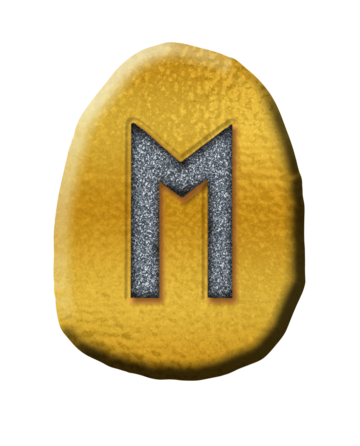
Ehwaz is the horse, the rune of trust, faithful partnership and steady progress. Like horse and rider in harmony, it speaks of the cooperation that carries both forward. Today togetherness counts – in trust you make faster progress together.
‘Ehwaz’ is the horse, the steed – related to the Latin ‘equus’. The rune stands for partnership, trust and the well-practised cooperation of rider and animal.
The Old English poem praises the horse as the pride of nobles, highly valued by heroes, a comfort to the restless – a faithful companion that never stands still.
Horses were sacred: white stallions were kept for oracles, and in ship burials like Oseberg sacrificed horses were found. Ehwaz embodies the bond between human and animal.
Odin’s eight-legged steed Sleipnir is the most famous horse in mythology – Ehwaz carries something of this magic of the mount.
Eh byþ for eorlum æþelinga wyn, hors hofum wlanc, ðær him hæleþ ymb welege on wicgum wrixlaþ spræce, and biþ unstyllum æfre frofur.The horse is a joy to nobles before princes, a steed proud of its hoofs, about which rich heroes on horseback exchange speech – and to the restless it is ever a comfort.Old English Rune Poem, st. 19 · trans. after Dickins 1915 (public domain)
Ehwaz did not survive into the Younger Futhark – the Old English poem is our only old voice. It shows the horse as a sign of trust and faithful partnership.
Proto-Germanic *ehwaz „horse", cognate with Latin equus and Sanskrit aśva. Old Norse poetic jór, Old English eh/eoh. The horse was sacred (Freyfaxi cult, horse sacrifice) – an animal between everyday life and the world of the gods.
As the sound /e/ Ehwaz is attested in early inscriptions but drops out of the Younger Futhark (the /e/ sound is written there with the í-rune). Its M-like form is easily confused with Mannaz.
Ehwaz and Mannaz stand deliberately side by side („horse and rider"): horse and human as a well-attuned pair. Because Ehwaz is explained only in the Old English poem, the reading rests on one source (Page; Dickins).
Rune-poem quotation: Old English Rune Poem after Bruce Dickins, Runic and Heroic Poems (Cambridge 1915, public domain); Norse stanzas after the Norwegian and Icelandic Rune Poems. Interpretation & etymology after R. I. Page (Runes), Michael Barnes (Runes – A Handbook) and Klaus Düwel (Runenkunde). Where name or meaning is disputed, it is noted in the text. In depth: runology overview.