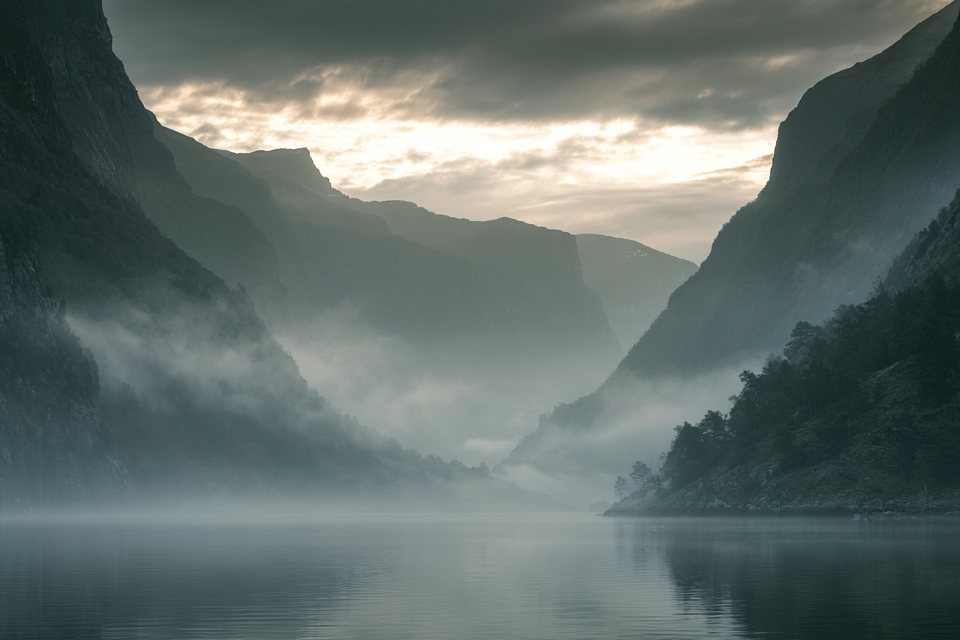
A lake named after a god. A lord’s hall the size of a church. Weapons sunk in the water, and a gold ring heavier than any other: Tissø on Zealand was one of the last great pagan cult sites before the North turned Christian.
Tissø means „Týr’s lake" (Týs sø) – the name carries the war-god Týr within it. On the shore of this Zealand lake stood, from the 6th to the 11th century, the seat of a magnate, joined to a sanctuary.
The Lord’s Hall
Over the centuries several vast halls succeeded one another. Beside the dwelling hall lay a specially fenced cult precinct with a small separate building – by the archaeologists’ reading, a manorial sanctuary (hov). Rule and cult here belonged inseparably together.
Weapons in the Water, Gold in the Ground
In the lake lay weapon sacrifices; in the ground amulets, Thor’s hammers and tools – and a spectacular gold neck-ring of about two kilograms, one of the heaviest in the North. The lake took the gifts; the water was a threshold to the gods.
Cult and Power in One Hand
Tissø confirms what the re-reading of Uppsala also suggests: the Norse cult was tied to the aristocracy, not to a separate temple-and-priest institution. The lord was also the cult leader. Around the year 1000 the site was abandoned – Christianity had come.
Sources. Tissø (Zealand, DK), 6th–11th c.; theophoric name Týs sø; a sequence of great halls + fenced cult precinct; weapon sacrifices in the lake; ~2 kg gold neck-ring. Scholarship: Lars Jørgensen, „Gudme-Lundeborg and Tissø" (National Museum of Denmark). Standard reference: R. Simek, Dictionary of Northern Mythology.
Myth-check. Tissø too had no „temple" like a church; the fenced separate building is read as a cult house, but that is interpretation. What matters is the find itself: it shows a hall-cult led by the landholder – and qualifies the older image of the great god-temple. The god’s name in the lake is real; the exact rites we infer from the finds.
Lars Jørgensen, Gudme-Lundeborg and Tissø. Two magnates’ complexes; National Museum of Denmark (Tissø). Rudolf Simek, Dictionary of Northern Mythology; Neil Price, The Viking Way.